Africanian
  • Home
  • News
  • News 24/7
  • Business
  • Sports
  • World
    • US
    • Russia
    • Europe
    • Asia
    • America
  • Events
No Result
View All Result
Africanian
  • Home
  • News
  • News 24/7
  • Business
  • Sports
  • World
    • US
    • Russia
    • Europe
    • Asia
    • America
  • Events
No Result
View All Result
Africanian
Home News

Morocco urged to rebuild using the traditional methods

Rabat has announced a budget of 120 billion dirhams ($11.6 billion) over five years to support 4.2 million people affected by the quake.

Morocco urged to rebuild using the traditional methods
Share on FacebookShare on TwitterShare via Whatsapp

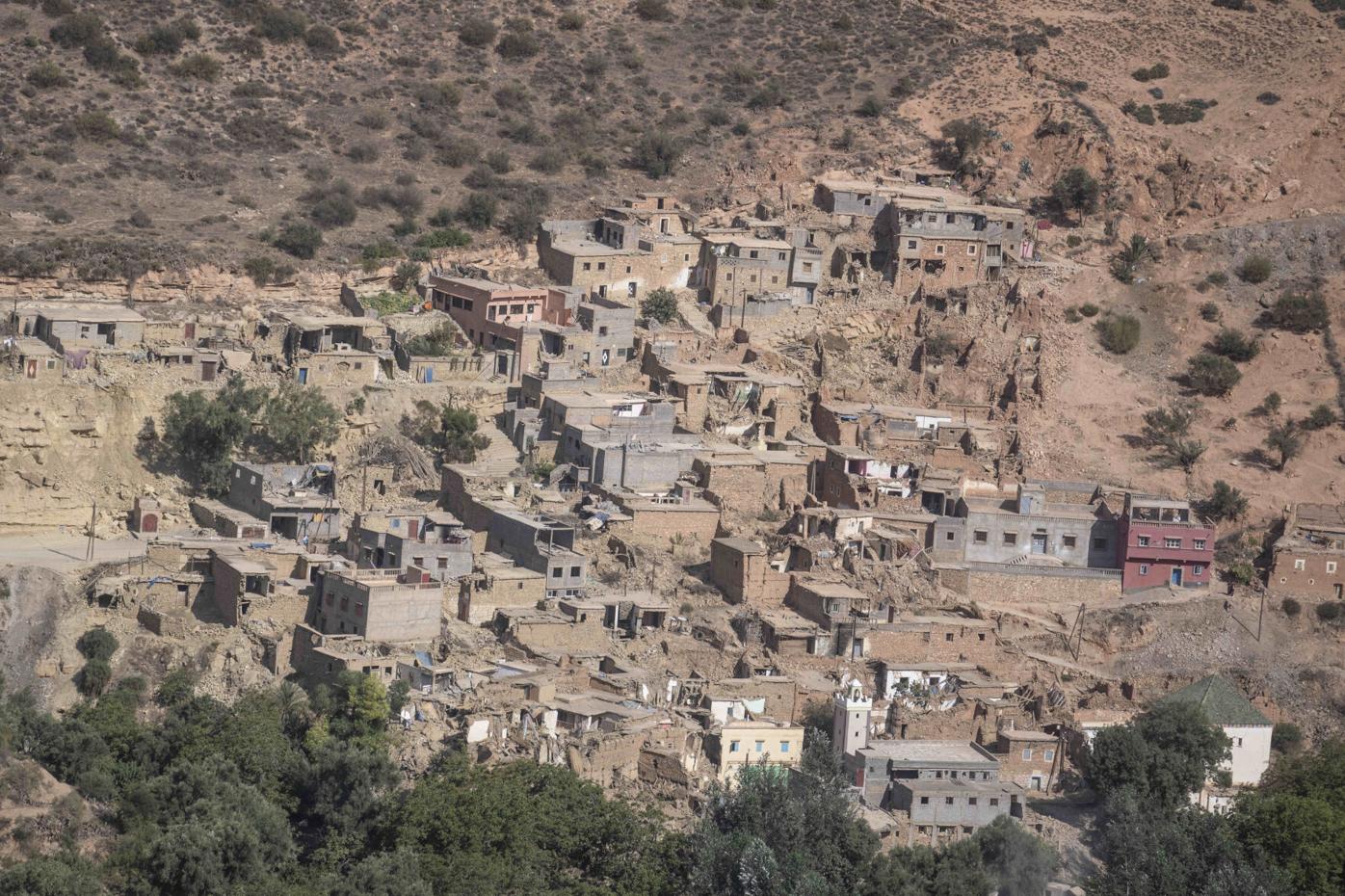
One month after a devastating 6.8 magnitude earthquake hit Morocco, rubble still litters villages around the Atlas Mountains. The North African country now faces the challenge of rebuilding and taking measures to make centuries-old Moroccan villages earthquake-proof, at speed, and without sacrificing its traditional architecture.

Read More: Inspiring Change Through Dreams & Heritage – Bisila Bokoko

“We’d prefer the government to rehouse us here in our village because we’ve heard that they’re going to move us a bit further away. We have our land here and our farming too, which we can’t give up. We are committed to our culture here,” said Mohamed El Asri, a resident of the village of Imi N’Tala.

Returning to traditional architecture may, in fact, be part of the answer to the need for greater resilience. In recent years, “often poorly built” concrete construction has displaced traditional earthen and stone buildings in the High Atlas, said Elie Mouyal, another Moroccan architect.

“There are roughly two scenarios. We have large towns with concrete, rather recent architecture. We’ll call them fairly recent buildings that weren’t quite up to standard, but they had the appearance of strength and modernity. These have pretty much collapsed everywhere. It’s a catastrophe. We also have what we call unconventional, vernacular, traditional architecture that has stood up to the test. I’m not saying that they’re intact,” said Salima Naji, architect and anthropologist.

Read More: Dreams Talks Explores Africa’s Aviation Future with Brienze Lawrence

Rabat has announced a budget of 120 billion dirhams ($11.6 billion) over five years to support 4.2 million people affected by the quake. King Mohammed VI stressed the importance of “listening to the local population” and respecting the “unique heritage” and traditions in the region during the reconstruction.


RelatedPosts

Algeria: $2.8 Billion and 495 km to transform the Sahara

Algeria: $2.8 Billion and 495 km to transform the Sahara

November 20, 2025
Zambia accelerates its energy transition with a 20 MW solar power project

Zambia accelerates its energy transition with a 20 MW solar power project

November 3, 2025
80,000 tons of “Made in Africa” Titanium to redefine the continent’s Industrial future

80,000 tons of “Made in Africa” Titanium to redefine the continent’s Industrial future

October 31, 2025
Africa strengthens global gas leadership as Philip Mshelbila becomes GECF Secretary General

Africa strengthens global gas leadership as Philip Mshelbila becomes GECF Secretary General

October 27, 2025
Nigeria launches Oyo Agro-Industrial Hub to drive inclusive rural development in Africa

Nigeria launches Oyo Agro-Industrial Hub to drive inclusive rural development in Africa

July 31, 2025
Tunisia’s energy transformation: How natural gas is powering industry and cleaner living

Tunisia’s energy transformation: How natural gas is powering industry and cleaner living

July 30, 2025
Lifelong Learning in Africa: The Silent Revolution Shaping the Continent's Future

Lifelong Learning in Africa: The Silent Revolution Shaping the Continent’s Future

July 30, 2025
Angola: Clementina Artur will no longer walk to the river every morning with an empty container

Angola: Clementina Artur will no longer walk to the river every morning with an empty container

July 24, 2025
The Invention of Time: How Humanity Created the Clock That Rules the World

The Invention of Time: How Humanity Created the Clock That Rules the World

July 24, 2025
Africanian News Is a dedicated project aimed at amplifying the voices of the African Ecosystem and Diaspora. We actively collaborate with initiatives to improve access to education and digital inclusion, both in traditional schools and through digital platforms, for African children.

It’s crucial to emphasize that none of the articles or images featured on our platform are intended for copyright infringement, neither now nor in the future.
If you believe that any information, text, image, etc., may be subject to copyright and should be removed, please notify us by sending an email to: [email protected]

News Categories

  • America (39)
  • Asia (131)
  • Business (1,232)
  • Culture (227)
  • Destinations (210)
  • Europe (153)
  • Food and Drink (14)
  • Guides & Tips (20)
  • Health (629)
  • Hotels (5)
  • Meetings and Tech (349)
  • News (2,534)
  • Opinion Piece (12)
  • Russia (73)
  • Science (62)
  • Sports (311)
  • Style (4)
  • Travel (145)
  • US (107)
  • World (422)

Your dreams matter; your stories matter.

Feel free to explore collaboration opportunities with us. Share your articles, thoughts, interviews, experiments, or no-comment videos by reaching out to [email protected].

You can also subscribe to our mailing list to receive the latest updates from Africanian News.

Newsletter

© 2025 Africanian News.

Log In

Sign In

Forgot password?

Don't have an account? Register

Forgot password?

Enter your account data and we will send you a link to reset your password.

Back to Login

Your password reset link appears to be invalid or expired.

Log in

Privacy Policy

Accept

Add to Collection

  • Public collection title

  • Private collection title

No Collections

Here you'll find all collections you've created before.

No Result
View All Result
  • Home
  • News
  • Business
  • Sports
  • Meetings and Tech
  • World

© 2025 Africanian News.