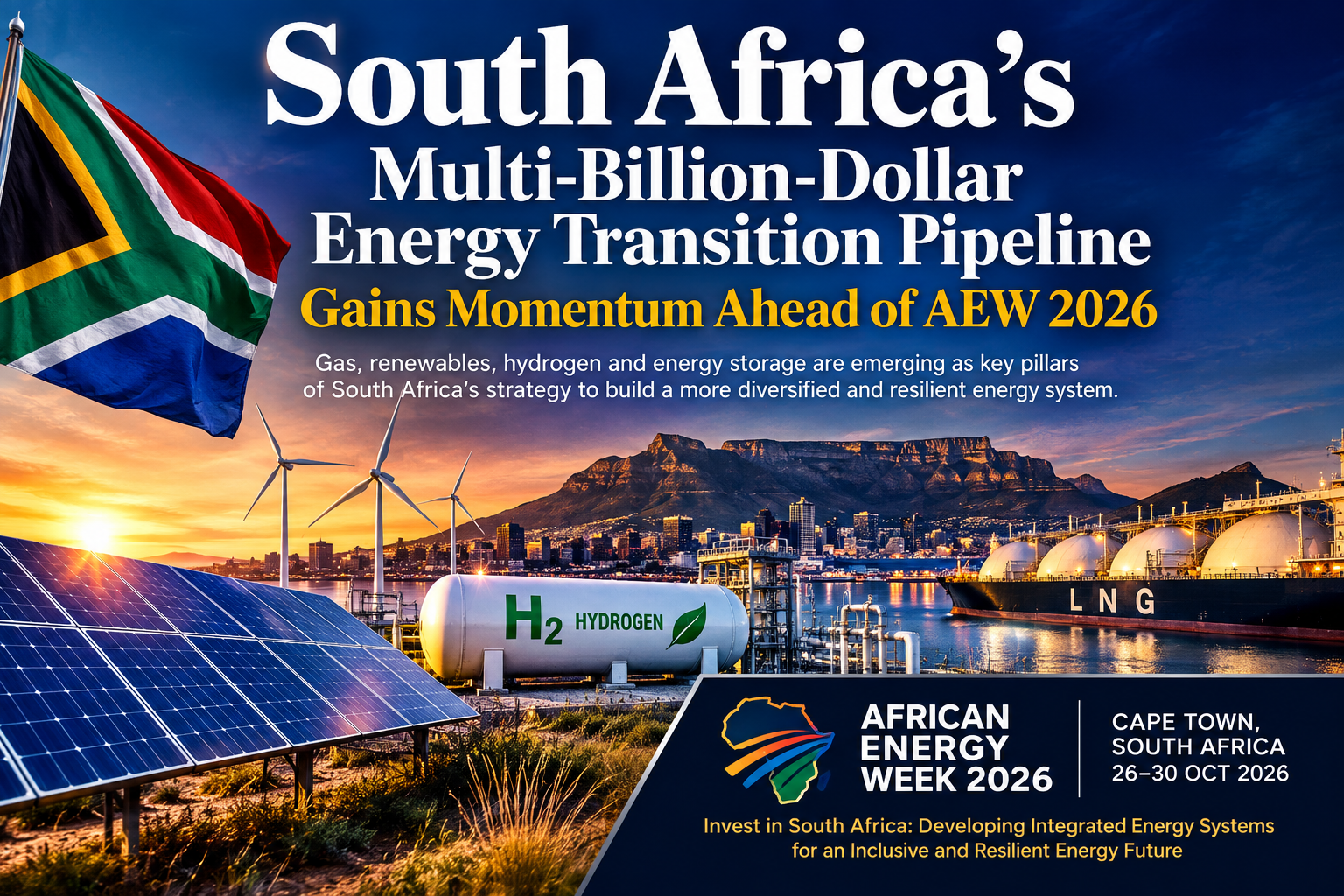
South Africa is entering a decisive phase in the transformation of its energy sector, with billions of dollars in projects spanning liquefied natural gas, renewable power, hydrogen, energy storage and electricity infrastructure creating new opportunities for investors and industrial partners.
The country’s evolving energy landscape will take center stage at African Energy Week (AEW) 2026, where the “Invest in South Africa: Developing Integrated Energy Systems for an Inclusive and Resilient Energy Future” session is expected to bring together policymakers, investors and industry leaders to examine the projects and financing models needed to support the transition.
South Africa is seeking to diversify its energy mix while reducing its dependence on coal and strengthening the reliability of its power system. The emerging model combines renewable energy with natural gas, liquid fuels, hydrogen and storage technologies, creating opportunities across infrastructure, industrial development and public-private partnerships.
A major component of the transition is the country’s Just Energy Transition Partnership, launched in 2021 with an initial $8.5 billion commitment from international partners. The initiative is supporting investments in renewable energy, electricity grids, electric vehicles and green hydrogen, while discussions have expanded around blended finance and greater private-sector participation.
Natural gas is also expected to play a transitional role as South Africa integrates larger volumes of wind and solar power into its electricity system. Gas-fired generation and LNG infrastructure could provide additional flexibility to the grid while supporting industrial consumers.
Several major LNG developments are advancing. At Richards Bay, the proposed Zululand Energy Terminal is being developed as South Africa’s first LNG import terminal and is expected to support Eskom’s planned 3,000-megawatt gas-to-power programme.
Meanwhile, the proposed Ngqura LNG terminal at the Coega Special Economic Zone is being positioned as another strategic gas import and regasification hub. The facility is expected to serve industrial users and independent power producers while supporting future gas-to-power capacity.
Together, the projects could establish important foundations for a domestic gas market and provide additional energy infrastructure as South Africa works to balance energy security with its longer-term transition objectives.
The country is simultaneously seeking to establish itself as a major player in the global green hydrogen economy. Sasol’s Boegoebaai green hydrogen development in the Northern Cape, together with plans for the proposed Boegoebaai Special Economic Zone, could support large-scale renewable-powered hydrogen production, industrial development and potential export opportunities.
The combination of gas, renewable energy, hydrogen and storage reflects a broader effort to create an energy system capable of supporting economic growth while improving reliability and affordability.
“South Africa’s energy transition represents one of the continent’s most significant investment opportunities,” said NJ Ayuk, Executive Chairman of the African Energy Chamber. He said the success of the transition would depend on developing an energy system capable of delivering reliability, affordability and economic growth.
AEW 2026 is expected to provide a platform for investors, governments and energy companies to assess opportunities across the sector and identify partnerships capable of turning proposed projects into operational infrastructure.
As South Africa reshapes its energy architecture, the scale of its emerging project pipeline positions the country as one of the continent’s most important markets for investment in the next generation of energy infrastructure.