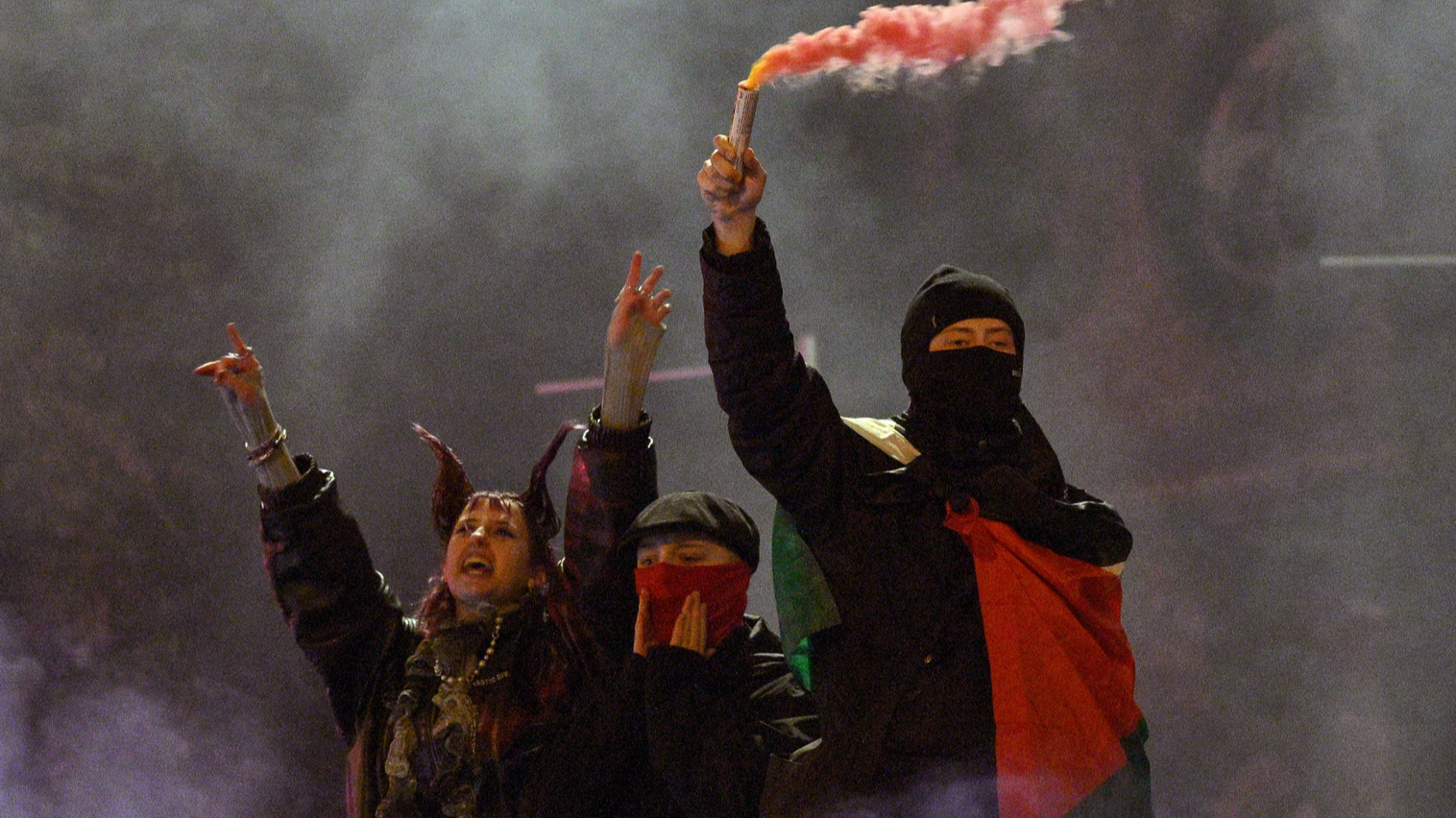
Europe is experiencing a new wave of demonstrations, as thousands of people take to the streets in different countries to express dissatisfaction with government policies, rising living costs and concerns about their economic and social future.
The protests, increasingly described as the new wave of “Gen Z demonstrations” because of the significant participation of younger people, have spread across Portugal, Poland, France and Germany, while Spain, Albania, Italy and Serbia have also recently witnessed large-scale public demonstrations.

Afreximbank Backs US$145 Million Nigerian Manufacturing Expansion to Boost Africa’s Industrial Capacity
Although the movements are driven by different national concerns, they share several underlying themes, including economic insecurity, housing affordability, education funding, public services and demands for greater political accountability.
In France, demonstrations have continued since October 17, bringing together students, trade unions and participants from the Yellow Vest movement in opposition to President Emmanuel Macron’s government. Protesters have raised concerns about the underfunding of education, the rising cost of living and dissatisfaction with the government’s direction.
According to France’s Interior Ministry, approximately 550,000 people participated in demonstrations across the country on the first day of protests. Clashes between demonstrators and riot police have subsequently been reported in several major cities, illustrating the growing tensions surrounding the movement.
Germany has also experienced significant mobilization, with the campaign group Gen Z regelt, meaning “Gen Z takes charge”, organizing demonstrations in 34 cities, including Berlin, Frankfurt and Munich.
The movement is opposing compulsory military service and demanding greater investment in education, improved healthcare provision and measures to address the rising cost of living.
In Berlin, spokesperson Lina Friedrich said the demonstrators were campaigning for peace and freedom rather than war and coercion. She also emphasized the need for stronger public healthcare and education systems, alongside a fairer distribution of social responsibilities.
While German authorities described most demonstrations as peaceful, incidents of violence were reported in several locations. In Frankfurt, police reported vandalism, smashed shop windows and the use of incendiary devices against emergency services. In Hamburg, barricades were also set on fire.
Authorities have expressed concern that extremist groups could exploit the demonstrations and turn legitimate public grievances into wider disturbances. Police have urged residents and visitors to avoid affected areas where violence has occurred.
Portugal has witnessed another significant demonstration, with thousands of people gathering in Lisbon on October 31 to oppose proposed changes to the country’s rental legislation. Campaigners argue that the government’s proposed measures could worsen an already difficult housing situation, particularly for younger people and lower-income households.
The country’s housing crisis has become a major source of public frustration, as high rental costs and limited access to affordable accommodation continue to place pressure on households.
Tensions escalated on November 1 when police moved to clear a protest camp established in Rossio Square. Hundreds of demonstrators attempting to defend the camp were dispersed using riot shields and batons, according to the report.
In Poland, demonstrations have taken a different political direction, with protesters gathering in support of President Karol Nawrocki amid a dispute involving Prime Minister Donald Tusk and the country’s constitutional institutions.
The president has accused the government of attempting to take control of the country’s top court following the suspension of its head, who is associated with the previous governing political camp. The dispute has intensified political divisions and brought questions about judicial independence and institutional authority into public demonstrations.
The developments across Europe demonstrate that the current wave of protests cannot be understood as a single coordinated movement. Each country has its own political circumstances, economic pressures and specific demands. However, the visible participation of younger generations has become a common feature.
For many young Europeans, concerns extend beyond immediate economic difficulties. Access to stable employment, affordable housing, quality education and reliable healthcare increasingly shapes expectations about their future. Opposition to compulsory military service in Germany also reflects broader debates about security, national responsibility and the relationship between citizens and the state.
The demonstrations are taking place against a wider backdrop of political polarization and growing public scrutiny of government decisions. While peaceful protest remains an important democratic mechanism for expressing dissatisfaction, incidents involving violence, vandalism and attacks on emergency personnel have raised concerns about public safety and the protection of democratic participation.
German Interior Minister Roman Poseck warned against allowing violent scenes witnessed during previous unrest in France to become a model for demonstrations elsewhere, emphasizing the importance of preventing further escalation.
As demonstrations continue across the continent, European governments face the challenge of addressing the underlying social and economic grievances while maintaining public order and protecting the right to peaceful assembly.
The emerging movement also raises broader questions about the relationship between younger generations and political institutions. For a generation increasingly concerned about affordability, opportunity, public investment and its future prospects, the streets have become an increasingly visible space for demanding answers.
Whether these demonstrations translate into lasting policy changes will depend on how governments respond to the demands being raised and whether dialogue can address the concerns driving public dissatisfaction.