
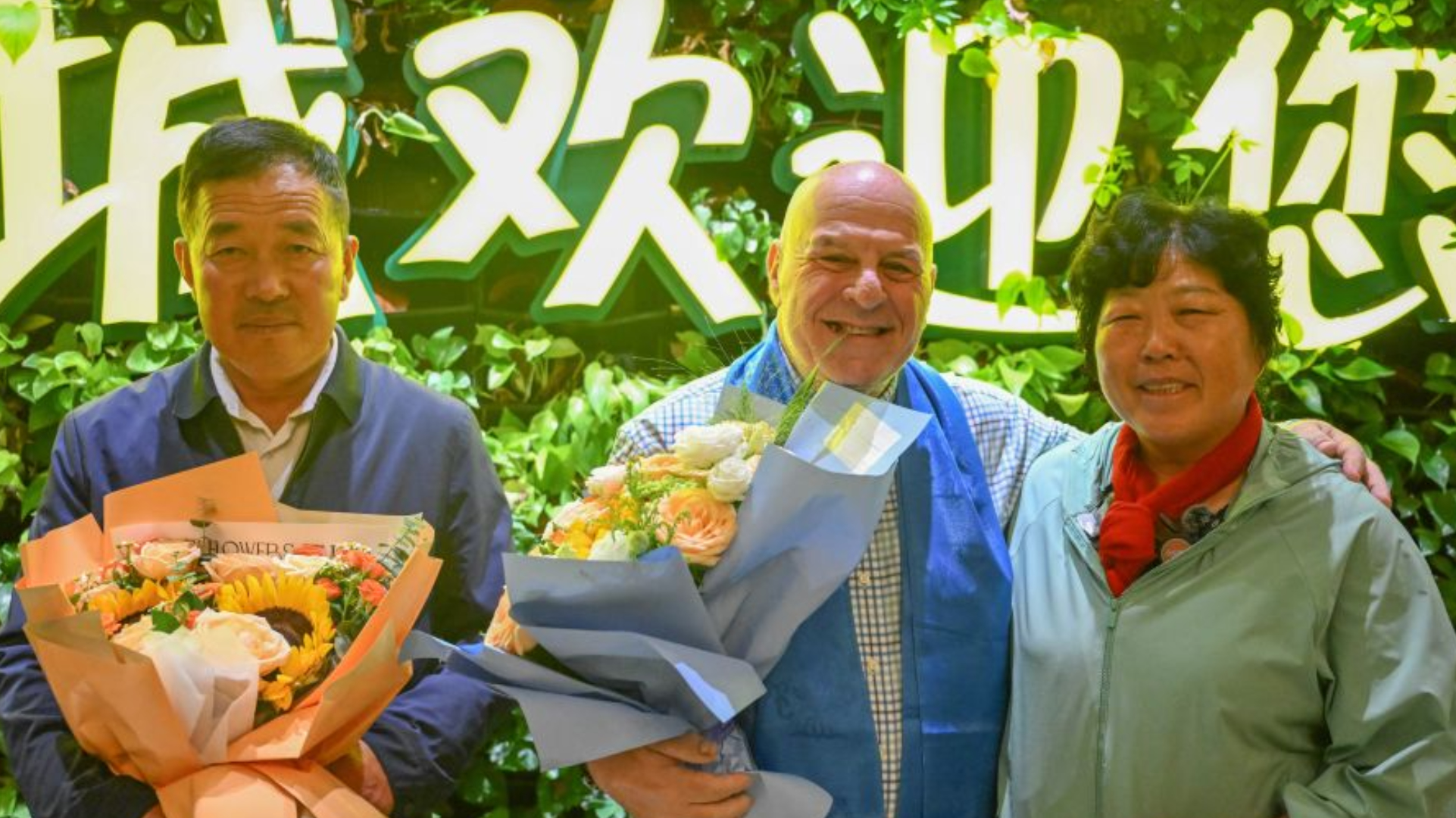
Twenty-six years after an American teacher helped her buy trees and equipment to fight desertification, Chinese environmentalist Yin Yuzhen finally stood face to face with the man she had spent years trying to find.
Yin and Ronald Sakolsky embraced and cried at Ordos Ejin Horo International Airport in Inner Mongolia on August 23, bringing together two people whose friendship began with a simple act of generosity and grew into a decades-long story of environmental restoration and cross-border friendship. Their story began in 1999, when Sakolsky, a history teacher from Pittsburgh, was in China teaching English at the Luoyang Foreign Language School in Henan Province.
While watching a television program about Yin’s efforts to combat desertification in the Mu Us Desert, he was deeply moved by what he saw. Yin and her family were attempting to transform barren, sand-covered land into a green landscape using little more than basic tools.Sakolsky decided he had to help.
Dreams Hub Showcases Equatorial Guinea’s Creative Vision at FITUR
He contacted organizations in the United States and eventually raised $5,000 for Yin’s tree-planting campaign. In 2000, he traveled to Inner Mongolia and saw firsthand the difficult conditions in which she was working.
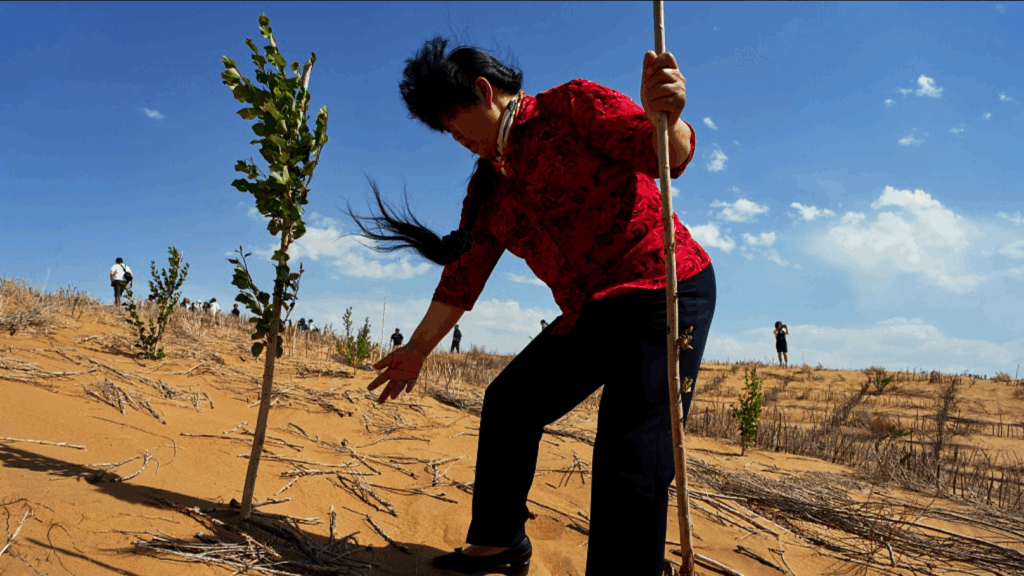
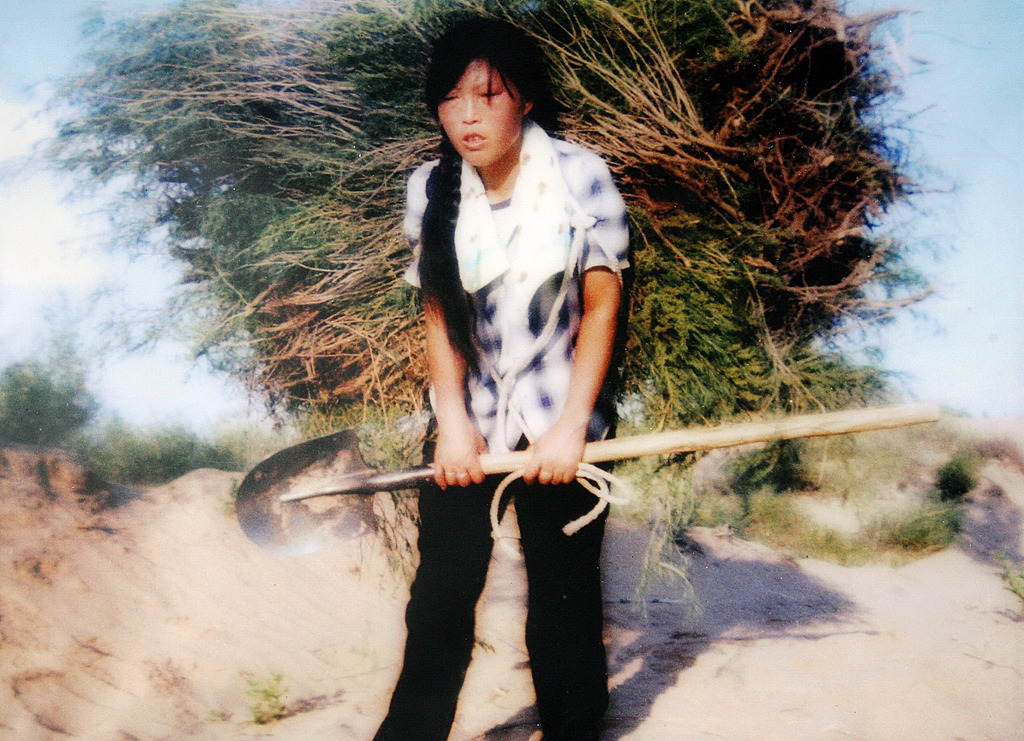
There were no machines, roads or modern equipment. Yin relied on iron shovels, carrying poles and her own physical strength to plant trees and protect them from the desert.
For Yin, the money arrived at a critical moment.
She used it to purchase stronger and taller saplings as well as equipment. Before receiving the donation, she could afford only small seedlings whose survival rate was below 10 percent. The new resources gave her a much better chance of establishing trees capable of surviving the region’s harsh sandstorms.
At the time, $5,000 represented roughly 20 years of income for Yin. Yet she focused almost entirely on the trees.“All I could think about was trees, nothing else,” she recalled.
Her determination had begun years earlier.
In 1985, when she was 19, Yin moved from Shaanxi Province to Wushen Banner in Ordos after marriage. She arrived in an environment dominated by sand, where strong winds regularly swept into her home and buried doors beneath the dunes.
Instead of accepting the desert as an unavoidable part of her life, she decided to fight it.
“I’d rather die planting trees than die being bullied by the desert,” Yin said.
She and her family spent decades planting trees and controlling desertification, gradually changing the landscape of the Mu Us sandy area.
Sakolsky’s contribution became one important part of that larger effort. According to reports about their story, the trees purchased with his donation eventually grew into more than 50,000 mature trees.
After Sakolsky returned to the United States, the two lost contact.
But Yin never forgot him.
As the desert changed, she continued photographing the landscape. She wanted Sakolsky to see what had become of the trees he had helped her plant. “I just want to prove to him that Chinese people have integrity,” Yin said. “We keep our word, and our actions are real, not just for show.”For years, however, she did not know where to find him.

That changed in May 2026, when Yin posted a video on Douyin appealing to the public for help locating her American friend. The video quickly spread online, and Sakolsky was found within 48 hours.
The discovery brought an emotional response from Yin, who had spent years hoping to see him again.“I am only someone who plants trees, but I received so much help from so many people,” she said. When Sakolsky finally returned to China in August, the reunion became an emotional moment for both.
After traveling for more than 30 hours from the United States and connecting through Beijing, he arrived at Ordos Ejin Horo International Airport, where Yin was waiting for him.
When they saw each other, both broke down in tears.“This is a dream come true,” Sakolsky said. “I never thought I would see her again. It is a miracle.”Sakolsky has consistently rejected the idea that he is the hero of their story.Instead, he has described Yin as the person who accomplished the extraordinary work of transforming the desert.“She is an amazing lady. She has done many things for China,” he said.
The friendship has also continued to influence Sakolsky’s life in the United States. He has told generations of his students about Yin and her determination, keeping her story alive long after he returned home.
Their reunion has now become a symbol of what can happen when individuals from different countries respond to one another with trust and generosity. For Yin, the journey was about proving that a seemingly impossible environmental challenge could be overcome.For Sakolsky, it began with a decision to help a stranger whose determination had touched him through a television screen.
More than two decades later, the result is visible across the landscape. The desert that once threatened Yin’s home now contains forests created through years of perseverance. And the $5,000 that once seemed like a modest act of assistance became part of a much larger story one about trees, friendship, environmental restoration and two people who refused to forget each other.
Sakolsky said their reunion could help people in China and the United States better understand one another and recognize what cooperation between ordinary people can achieve. “Together we can do something very good for this earth,” he said.