Japan has lodged a strong protest with the United States following the arrest of a U.S. Marine suspected of robbing and killing a Japanese woman in Okinawa, prompting renewed public anger over crimes involving American military personnel stationed on the island.
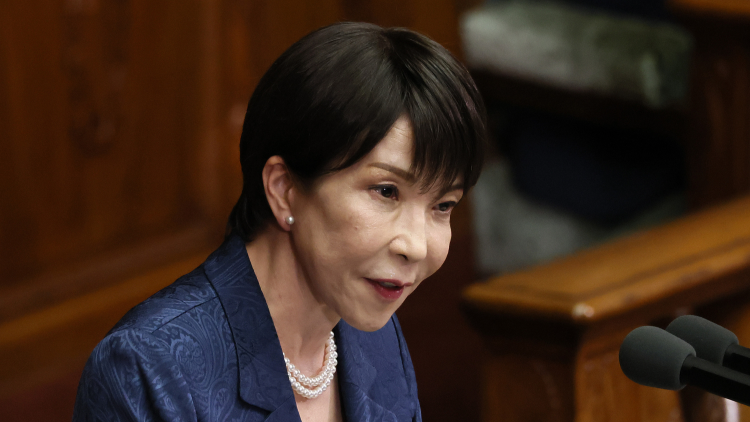
Japanese Prime Minister Sanae Takaichi said the government had demanded full cooperation from the United States in the investigation, stronger discipline among U.S. military personnel and comprehensive measures to prevent similar incidents. Japanese officials have emphasized that incidents involving U.S. service members create significant concern among local communities.
Zambia’s Women Turn Traditional Handloom Skills Into Global Trade
The suspect, 20-year-old Lance Corporal Devin Jacob Ballard, is stationed at Marine Corps Air Station Futenma in Okinawa. Okinawa prefectural police arrested him on suspicion of killing 39-year-old Anna Yagi at a hotel in Naha in the early hours of October 3 and taking her belongings. Ballard has denied the allegations, according to police. Police said Yagi died after pressure was allegedly applied to her neck. The case was subsequently forwarded to the Naha Public Prosecutors Office, while the investigation continues.
The arrest has generated a strong political reaction in Tokyo. Foreign Minister Toshimitsu Motegi summoned U.S. Ambassador George Glass, while Defense Minister Shinjiro Koizumi summoned the commander of U.S. Forces Japan to convey Japan’s concerns and demand measures to strengthen discipline and prevent further incidents.
The U.S. side has expressed condolences and pledged cooperation with Japanese authorities. The U.S. Marine Corps has also said it is cooperating with the investigation and emphasized expectations that its personnel maintain high standards of conduct.
The case has also triggered anger in Okinawa, where the presence of U.S. military facilities has been a contentious issue for decades. The island hosts a large share of U.S. military forces stationed in Japan, with roughly 18,000 U.S. Marines among the American personnel based across the country.
Local officials and residents have raised concerns that the latest incident could deepen the sense of insecurity associated with the concentration of U.S. military facilities on the island.
Okinawa Governor Genta Koja has condemned the incident and criticized the effectiveness of previous measures intended to improve discipline among U.S. service members. He has also called for stronger action to address the concerns of Okinawan communities.
Protests have taken place in Tokyo, with demonstrators connecting the latest case to a longer history of crimes involving U.S. military personnel in Okinawa. Some protesters have also criticized Japan’s handling of the U.S.-Japan military relationship and called for greater accountability.
The incident has revived debate over the U.S.-Japan Status of Forces Agreement, which governs the legal position and treatment of U.S. military personnel stationed in Japan. Critics have argued that the agreement can complicate Japanese investigations and jurisdiction in certain cases involving American service members.
Okinawa has long carried a disproportionate share of Japan’s U.S. military infrastructure. The island represents only a small portion of Japan’s territory but hosts the majority of U.S. military facilities in the country, making the American military presence a persistent political and social issue.
The latest case follows a history of serious crimes involving U.S. personnel that have generated protests and demands for changes to the security arrangement. Official Okinawa police figures cited in recent reporting show that cases involving U.S. military personnel, civilian employees and their family members reached 101 in 2025, the first time the annual figure had exceeded 100 since 2003.
The killing could therefore have consequences beyond the criminal investigation. It comes at a sensitive time for Japan’s security policy, with Tokyo seeking to strengthen its defense posture and maintain close military cooperation with Washington in response to the wider security environment in East Asia.
At the same time, the Japanese government faces pressure to address concerns from Okinawan communities that bear much of the burden of hosting U.S. military infrastructure. The Futenma base, where Ballard is stationed, has itself been at the center of a long-running dispute over its future. Tokyo has pursued plans to relocate the facility to the Henoko area, but the proposal has faced strong local opposition and prolonged delays.
For the Japanese government, the immediate priority remains the investigation and ensuring that the suspect is dealt with under Japanese legal procedures. Authorities have simultaneously pressed Washington to cooperate fully and take steps to prevent further incidents.
The U.S. military presence remains strategically important to the Japan-U.S. alliance, particularly given Okinawa’s location in the southwestern part of Japan. But the latest arrest has once again exposed the difficult balance between national security priorities and the concerns of communities hosting foreign military forces.
As the investigation proceeds, Japanese authorities are expected to maintain pressure on the United States for accountability and stronger preventive measures, while local opposition groups are likely to continue questioning the long-term costs of the military presence on Okinawa.